 Image 1 of 1
Oil on Canvas
24” x 18” x 0.75”
2001
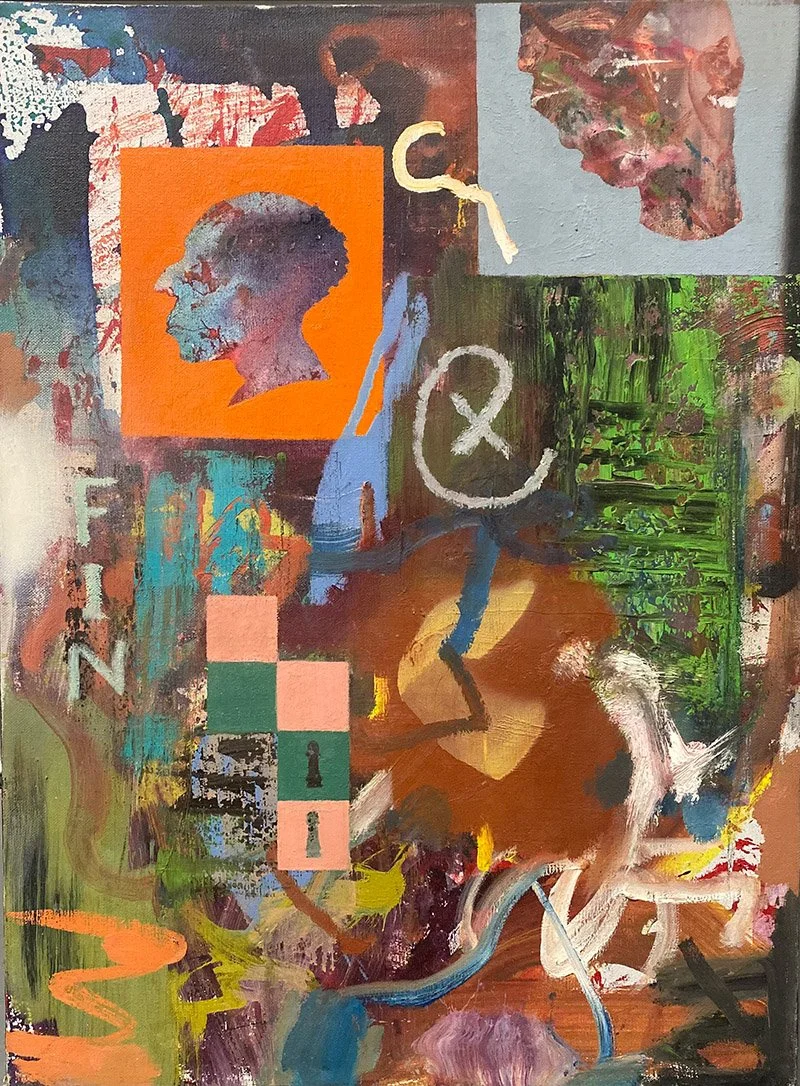
Inspired by Beckett's bleak theatrical play Endgame, this painting lends it visual form as a collision of figuration and dissolution. The silhouetted profile in orange—rendered with the stark economy of a cameo or shadow puppet—becomes Hamm in his chair, or perhaps Clov trapped in perpetual service, unable to sit, unable to leave. This is recognitionism at its most pointed: we are shown forms only to watch them slip back into painterly abstraction from which they came, much like Beckett's characters rehearsing the same redundant routines in their sealed room while the world outside has ended. Their actions remarking on the very futility of existence.
The painted letters spelling "FIN"—end in French—hover like a promise that never arrives. Hamm calls for his story to finish, Clov threatens to leave, yet the play refuses closure, spiraling instead through bitter, circular dialogue between master and servant, all trapped in dependencies they cannot escape. The chessboard pattern suggests the games Hamm plays to pass time, while the architectural greens might be the world glimpsed through those high windows—nature reduced to memory, to description, to lies. Like the play itself, the painting offers no exit and no explanation, only the compulsion to continue looking at a space where ending and going on have become indistinguishable.
Oil on Canvas
24” x 18” x 0.75”
2001
Inspired by Beckett's bleak theatrical play Endgame, this painting lends it visual form as a collision of figuration and dissolution. The silhouetted profile in orange—rendered with the stark economy of a cameo or shadow puppet—becomes Hamm in his chair, or perhaps Clov trapped in perpetual service, unable to sit, unable to leave. This is recognitionism at its most pointed: we are shown forms only to watch them slip back into painterly abstraction from which they came, much like Beckett's characters rehearsing the same redundant routines in their sealed room while the world outside has ended. Their actions remarking on the very futility of existence.
The painted letters spelling "FIN"—end in French—hover like a promise that never arrives. Hamm calls for his story to finish, Clov threatens to leave, yet the play refuses closure, spiraling instead through bitter, circular dialogue between master and servant, all trapped in dependencies they cannot escape. The chessboard pattern suggests the games Hamm plays to pass time, while the architectural greens might be the world glimpsed through those high windows—nature reduced to memory, to description, to lies. Like the play itself, the painting offers no exit and no explanation, only the compulsion to continue looking at a space where ending and going on have become indistinguishable.