 Image 1 of 4
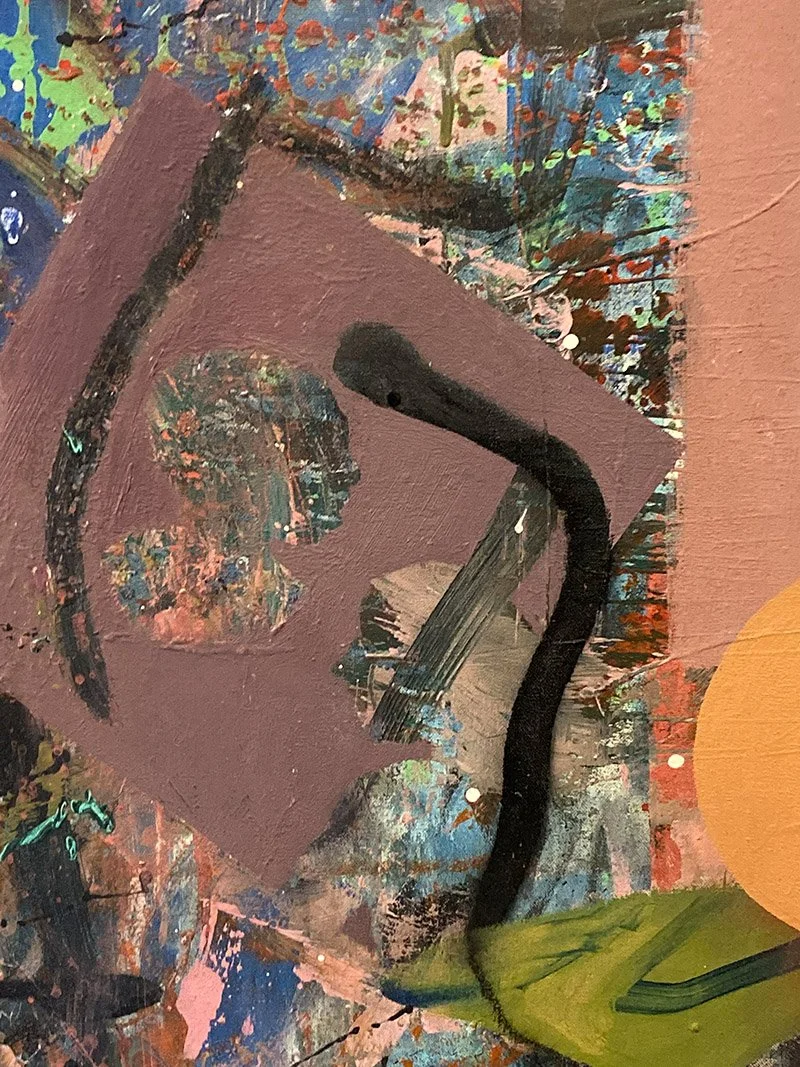 Image 2 of 4
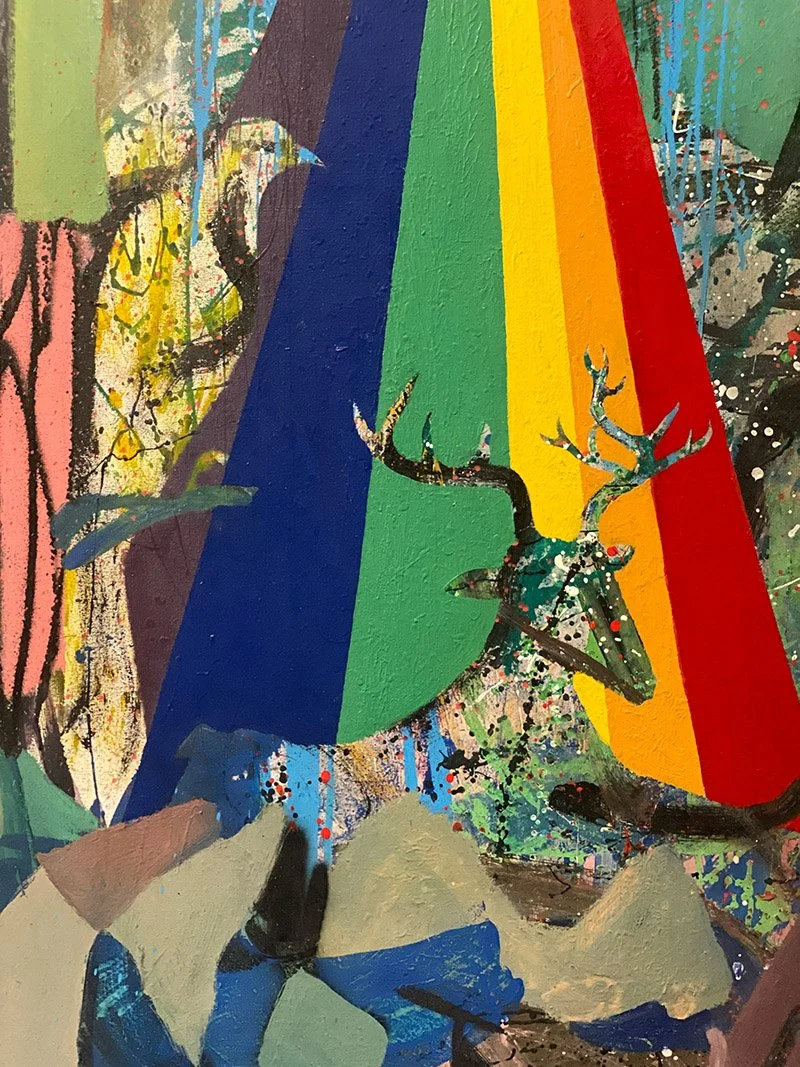 Image 3 of 4
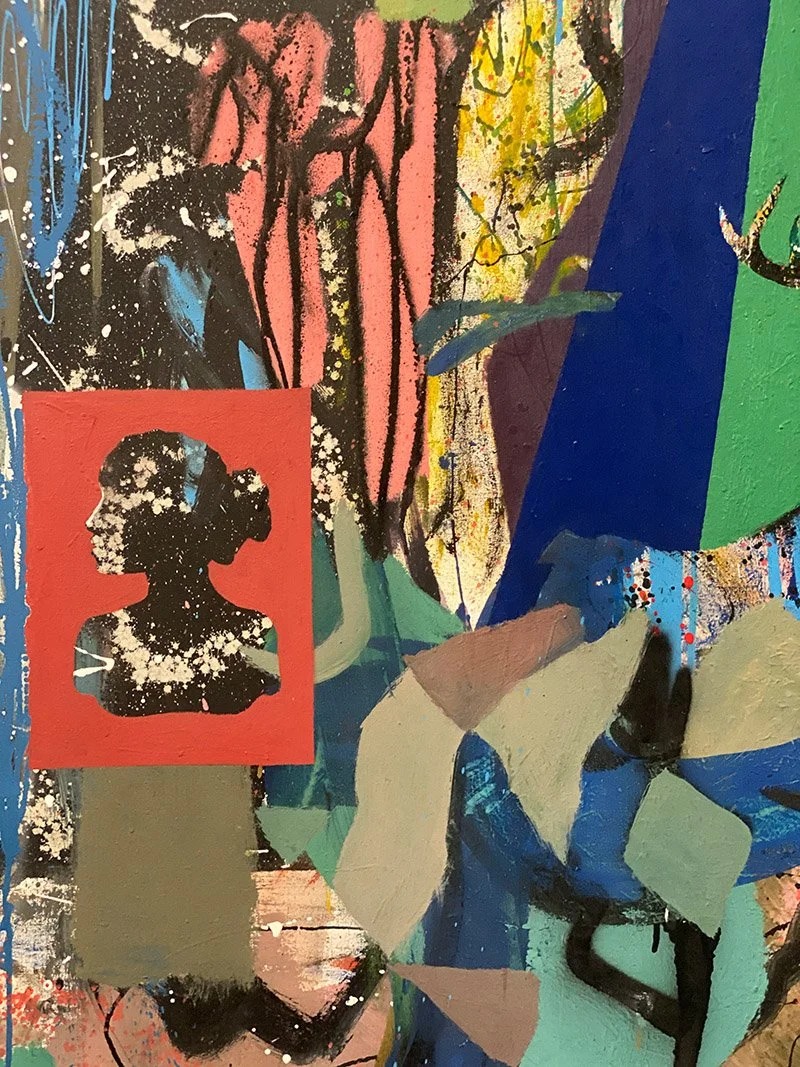 Image 4 of 4
Acrylic and Oil Pastel on Canvas
71” x 59”
2010
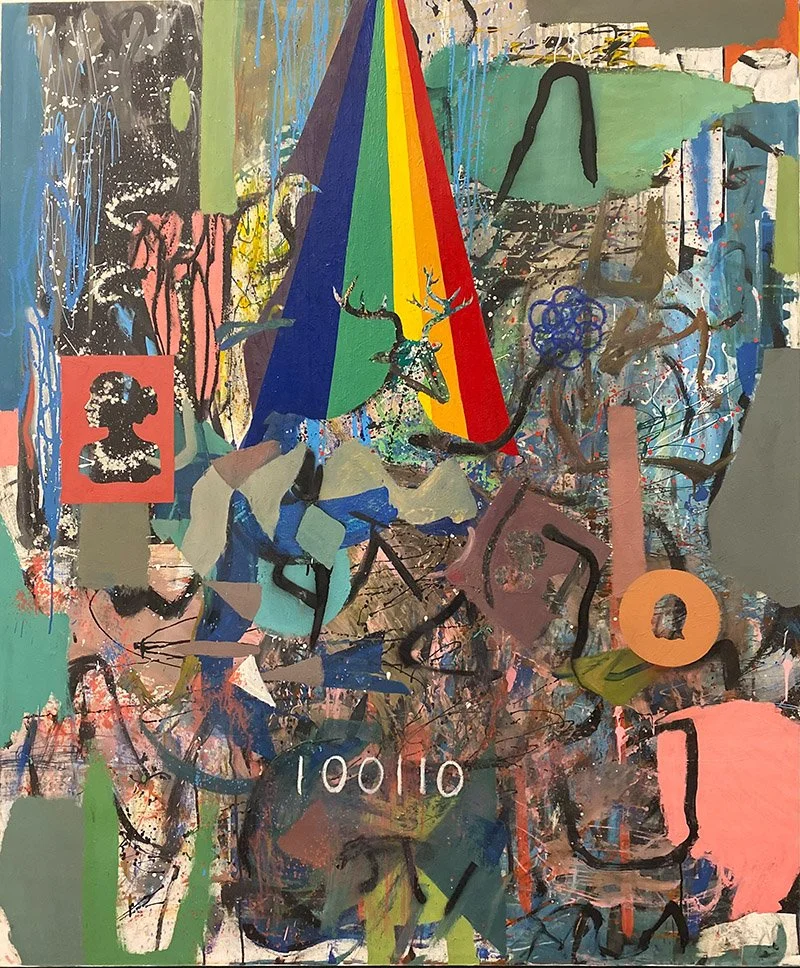
The artist employs a stratified approach to picture-making in Human Nature, building the visual field through layered abstraction and the selective isolation of forms by chromatic shape—what he now calls Recognitionism. The canvas becomes an archaeological record of imagination: passages of dripped, scraped, and brushed paint are overlaid with juxtapositional geometric forms—hard-edged rectangles in coral, mint, and grey that serve as both compositional anchors and deliberately placed interruptions. These planes introduce spatial ambiguity, asserting themselves on the surface while simultaneously suggesting depth in relation to the turbulent under layers.
The chromatic landscape is organized around a central prismatic ray of light descending from above, a vertical spine that threads saturated primaries and secondaries through an otherwise muted terrain of blues, greens, and earth tones. This rainbow functions as both structural backbone and conceptual hinge—fracturing and suturing the pictorial space at once. It becomes a threshold between the painting’s left and right hemispheres, each containing its own distinct figurative emergence. White gestural marks—part scribble, part calligraphic notation—animate the surface with a kind of visual static, alternately revealing and obscuring the imagery latent within.
Recognitionism reveals itself most clearly in the way animal and human forms surface through negative space and tonal contrast. A deer with articulated antlers materializes near the center-right, defined not through additive drawing but through the encirclement of color that clarifies its silhouette from the surrounding flux. Profiled heads appear on the left as collaged fragments, their presence felt more than fully rendered. The date inscription “100110” serves as both documentary trace and compositional element, marking the painting’s unfolding within a precise temporal moment.
Acrylic and Oil Pastel on Canvas
71” x 59”
2010
The artist employs a stratified approach to picture-making in Human Nature, building the visual field through layered abstraction and the selective isolation of forms by chromatic shape—what he now calls Recognitionism. The canvas becomes an archaeological record of imagination: passages of dripped, scraped, and brushed paint are overlaid with juxtapositional geometric forms—hard-edged rectangles in coral, mint, and grey that serve as both compositional anchors and deliberately placed interruptions. These planes introduce spatial ambiguity, asserting themselves on the surface while simultaneously suggesting depth in relation to the turbulent under layers.
The chromatic landscape is organized around a central prismatic ray of light descending from above, a vertical spine that threads saturated primaries and secondaries through an otherwise muted terrain of blues, greens, and earth tones. This rainbow functions as both structural backbone and conceptual hinge—fracturing and suturing the pictorial space at once. It becomes a threshold between the painting’s left and right hemispheres, each containing its own distinct figurative emergence. White gestural marks—part scribble, part calligraphic notation—animate the surface with a kind of visual static, alternately revealing and obscuring the imagery latent within.
Recognitionism reveals itself most clearly in the way animal and human forms surface through negative space and tonal contrast. A deer with articulated antlers materializes near the center-right, defined not through additive drawing but through the encirclement of color that clarifies its silhouette from the surrounding flux. Profiled heads appear on the left as collaged fragments, their presence felt more than fully rendered. The date inscription “100110” serves as both documentary trace and compositional element, marking the painting’s unfolding within a precise temporal moment.