 Image 1 of 1
Oil on canvas over board
30” x 24” x 1”
2010
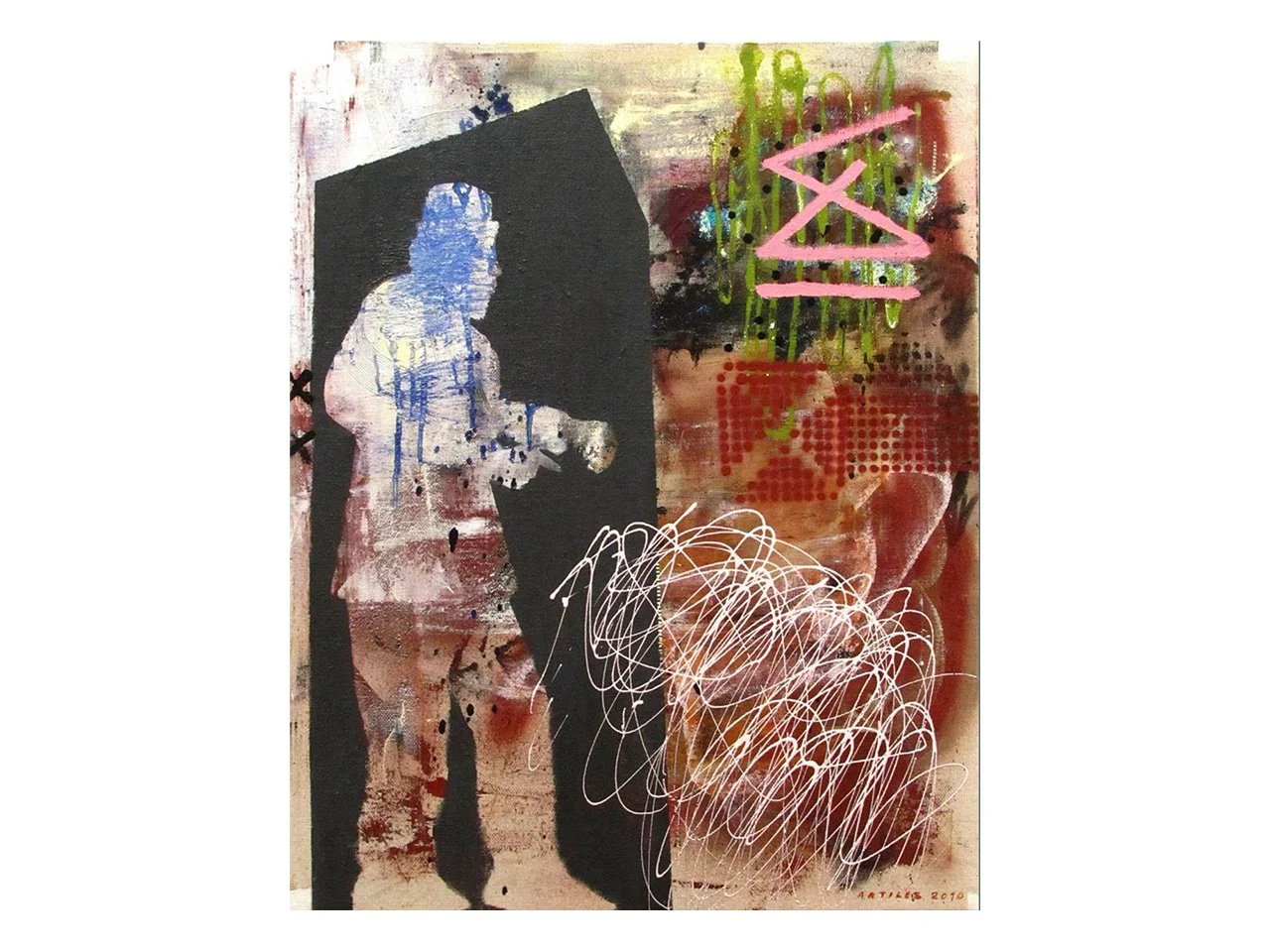
In the canonical recordings that jazz scholars treasure most—the Riverside sessions, the Blue Note masterworks—there exists a peculiar phenomenon that no microphone could capture: those transcendent moments when Thelonious Monk would rise from the piano bench, compelled by an ecstasy too profound for his fingers alone to channel. Rodney Artiles' Monk's Dance resurrects this ritual through his signature recognitionism technique, where Monk's silhouette emerges from gestural abstraction like a phantom materializing from pure sound. The figure-ground reversal operates as visual syncopation—Monk simultaneously present and absent, solid and dissolving, exactly as his musical logic functioned: making space speak as loudly as notes.
What distinguishes this work for collectors is its conceptual kinship with Monk's own compositional method. Just as Monk heard melodies in the "wrong" notes, finding beauty in dissonance and angular phrasing, Artiles discovers figurative truth within abstract chaos. The layered surfaces, the halftone textures, the gestural white scribbles that suggest both cosmic energy and piano wire vibrations—all create a palimpsest of meaning that rewards sustained looking. This isn't illustration but translation: the visual equivalent of those moments when "'Round Midnight" would stop mid-phrase, and the High Priest would shuffle in circles, hat cocked, before returning to complete the thought only he could hear.
Oil on canvas over board
30” x 24” x 1”
2010
In the canonical recordings that jazz scholars treasure most—the Riverside sessions, the Blue Note masterworks—there exists a peculiar phenomenon that no microphone could capture: those transcendent moments when Thelonious Monk would rise from the piano bench, compelled by an ecstasy too profound for his fingers alone to channel. Rodney Artiles' Monk's Dance resurrects this ritual through his signature recognitionism technique, where Monk's silhouette emerges from gestural abstraction like a phantom materializing from pure sound. The figure-ground reversal operates as visual syncopation—Monk simultaneously present and absent, solid and dissolving, exactly as his musical logic functioned: making space speak as loudly as notes.
What distinguishes this work for collectors is its conceptual kinship with Monk's own compositional method. Just as Monk heard melodies in the "wrong" notes, finding beauty in dissonance and angular phrasing, Artiles discovers figurative truth within abstract chaos. The layered surfaces, the halftone textures, the gestural white scribbles that suggest both cosmic energy and piano wire vibrations—all create a palimpsest of meaning that rewards sustained looking. This isn't illustration but translation: the visual equivalent of those moments when "'Round Midnight" would stop mid-phrase, and the High Priest would shuffle in circles, hat cocked, before returning to complete the thought only he could hear.